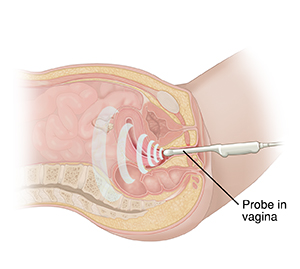
A transvaginal ultrasound is an imaging test. An ultrasound uses sound waves to form pictures of your organs that can be seen on a screen. It's often done with a probe placed on the belly. A transvaginal ultrasound uses a special probe that is put into your vagina. It uses sound waves to make pictures of your uterus, ovaries, and other pelvic organs. This test can be used to check symptoms such as pain. It can also check for problems. In pregnant women, it's used to check the unborn baby or fetus. The test is often done by a specially trained technologist called a sonographer.
Getting ready for your test
-
You may be asked to go to the bathroom. Your bladder may need to be empty before the test.
-
Tell the sonographer what medicines you take. Let them know if you have had pelvic surgery.
-
Answer any other questions the sonographer asks. Your answers will help them adapt the test to your health needs.
During your test
-
You may change into a hospital gown. You'll then lie down on an exam table with your knees raised, as you would for a pelvic exam.
-
The sonographer will use a thin handheld probe. It's shaped like a tampon. The probe has a sterile cover and nongreasy gel. It's gently put inside your vagina. In some cases, you may be asked to put the probe in yourself, as you would a tampon.
-
The sonographer moves the probe to get the best picture. You may feel pressure. Tell the sonographer if you feel pain.
After your test
Before leaving, you may need to wait for a short time while the images are reviewed. You can go back to your normal routine right after the test. Your doctor will let you know when the results of your test are ready.
Note
Be aware that although the sonographer can answer questions about the test, only your doctor can explain the results.
Online Medical Reviewer: Daniel N Sacks MD
Online Medical Reviewer: Donna Freeborn PhD CNM FNP
Online Medical Reviewer: Louise Cunningham RN BSN
Date Last Reviewed: 07/01/2025
© 2000-2026 The StayWell Company, LLC. All rights reserved. This information is not intended as a substitute for professional medical care. Always follow your healthcare professional's instructions.