As the leg moves, the kneecap moves, too. It slides up and down its track on the thighbone. But if the kneecap slides "off track"—even a little—pain and damage can result.
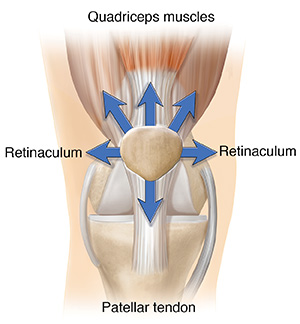
When the kneecap is "on track"
The kneecap is controlled by muscles and ligaments that work like a system of pulleys. This system includes the quadriceps muscles, retinacula, and patellar tendon. If all these parts pull in just the right way, the kneecap stays in place and glides easily in its track. Pressure is spread evenly on the back of the kneecap.
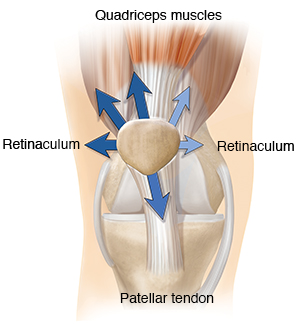
When the kneecap gets "off track"
An injury can cause some muscles or ligaments to pull too hard or not hard enough. When that happens, the kneecap no longer glides easily against the thighbone. The kneecap may even tilt. Pressure may be spread unevenly on the back of the kneecap, causing wear and tear on the cartilage.
Online Medical Reviewer: Bass, Pat F. III, MD, MPH
Online Medical Reviewer: Joseph, Thomas N., MD
Date Last Reviewed: 08/01/2023
© 2000-2026 The StayWell Company, LLC. All rights reserved. This information is not intended as a substitute for professional medical care. Always follow your healthcare professional's instructions.