If your symptoms are mild, medicines may be enough to reduce pain and swelling. For more severe arthritis, you may need surgery to improve the condition of the joint.
Medicine
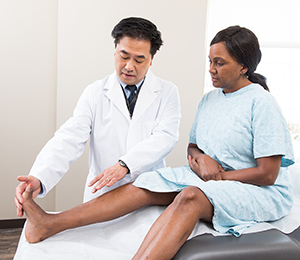
Your healthcare provider may prescribe medicine—pills or injections—to limit pain and swelling. Ice, aspirin, acetaminophen, or ibuprofen may help relieve mild symptoms that occur after activity.
Surgery and bone trimming
To ease movement and reduce pain, your healthcare provider may trim damaged bone. If arthritis is bad, the joint may be fused or removed. If the bone is not damaged too badly, your healthcare provider may simply shave away bone spurs. Any extra bone growth related to a bunion may also be trimmed.
Fusing joints
If damage is more severe, your healthcare provider may fuse the joint to prevent the bones from rubbing. Afterward, staples, plates, or screws may hold the bones in place so they heal correctly. In some cases, the joint may be removed and replaced with an implant.
After surgery
During the early stages of recovery, your foot is likely to be bandaged and immobilized for a while. For best results, follow up with your healthcare provider as scheduled. These visits help make sure that your foot heals correctly.
As you heal
After surgery, you’ll be told how to care for your incision and how soon you can start walking on the foot again. Until the foot can bear weight, you may need to walk with crutches or a cane. For surgery on the big toe, your foot may be splinted to limit movement for a few weeks. Despite this, you should be able to walk soon after surgery. For surgery on rear or midfoot joints, you may need to wear a cast or surgical shoe. These joints are fairly large, so full recovery may take a few months. Once the bone has healed, any staples, plates, or screws may be removed.
Online Medical Reviewer: Amy Finke RN BSN
Online Medical Reviewer: Diane Horowitz MD
Online Medical Reviewer: Raymond Kent Turley BSN MSN RN
Date Last Reviewed: 03/01/2024
© 2000-2026 The StayWell Company, LLC. All rights reserved. This information is not intended as a substitute for professional medical care. Always follow your healthcare professional's instructions.