Deep breathing helps keep your lungs clear. If you’ve had surgery, this will help you get better faster. Deep breathing also helps you breathe easier. And it may prevent a lung infection or other complications.
Home care
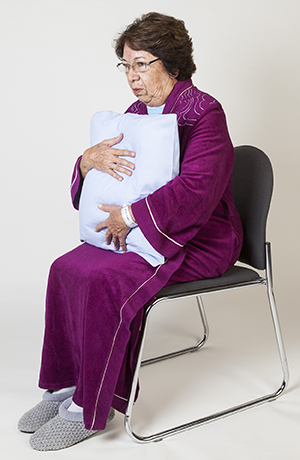
Follow these steps to do deep breathing:
-
Sit on the edge of a bed or a chair. You can also lie on your back with your knees slightly bent.
-
If you've had surgery on or near your chest or belly, hold a pillow or rolled-up towel firmly against your cut (incision) with both hands. Hug the pillow.
-
Breathe out normally.
-
Breathe in deeply through your nose. Feel your stomach push out as you breathe in.
-
Hold your breath for 2 to 5 seconds, if possible.
-
Pucker your lips as you would to blow out a candle.
-
With your lips puckered, breathe out slowly through your mouth. You should feel your chest go down as you breathe out.
-
Rest for a few seconds, breathing normally.
-
Relax your neck and shoulder muscles.
-
Repeat the above steps as many times as directed.
Follow-up
Make a follow-up appointment. Or follow up as directed by your health care provider.
When to get medical care
Contact your health care provider right away if any of these occur:
-
Fever of 100.4°F (38°C) or higher, or as advised by your provider.
-
Signs of infection, if you've had surgery. These include redness, swelling, or warmth at your incision site. These also include pus or fluid draining from the site.
-
Brownish or bloody sputum (mucus).
-
Minor bleeding from surgical site.
-
New cough.
-
Upset stomach (nausea) or vomiting.
-
Increasing pain.
-
Dizziness or weakness.
-
Fast or irregular heartbeat.
Call 911
Shortness of breath may be a sign of a serious health problem. Call
-
Confusion or trouble staying awake
-
Loss of consciousness or fainting
-
Chest pain or tightness
-
Trouble breathing or wheezing
-
Bluish skin or lips
-
Coughing up blood
-
Severe pain
-
Severe bleeding or new opening at surgical site
Online Medical Reviewer: Chris Southard RN
Online Medical Reviewer: Daphne Pierce-Smith RN MSN
Online Medical Reviewer: Shaziya Allarakha MD
Date Last Reviewed: 02/01/2025
© 2000-2026 The StayWell Company, LLC. All rights reserved. This information is not intended as a substitute for professional medical care. Always follow your healthcare professional's instructions.