Kids begin making their own food decisions as they grow older. You can't always have the final say. That's why you need to help your teen develop healthy eating habits. Start by following the suggestions below.
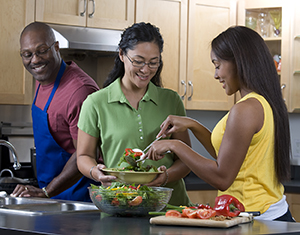
Get everybody in the kitchen!
Set aside time each week for planning and sharing meals. Have your teen help with meal planning and food shopping. This provides a chance to make healthy choices. Your teen can also help prepare food. Then the whole family can eat the meal you made together.
Pay attention to portions
In these days of jumbo-sized meals, it's easy to get carried away. Serve portions that make sense for your kids. If they're full, don't make them clean their plates. And if they're still hungry, offer seconds - especially of vegetables or fruit.
Limit soda and juice drinks
Sodas and juice drinks are the real monsters when it comes to weight gain. A small soda is OK once in a while. But it's no substitute for healthier drinks. Sports drinks and juice drinks should be limited, too. These can contain almost as much sugar as soda. One cup of 100% fruit juice each day is fine—but that's all your teen needs. The rest of the time, water, low-fat or nonfat milk, and fortified soy milk are best. Note: If the kids drink milk, but adults get soda, this sends a mixed message.
Good choices anytime
-
Fruits and vegetables
-
Whole-grain breads and cereals
-
Low-fat or nonfat milk, yogurt, and other dairy
-
Lean protein, like fish, skinless chicken breast, tofu, and beans
-
Eggs
-
Water
Only once in a while
-
Sweets, such as candy bars, cookies, and ice cream
-
Salty snacks, like chips
-
Fried food, like french fries and potato nuggets
-
Soda, sports drinks, and sugary juice drinks
Time-saving tips
When you're busy, it can be hard to eat healthy. These tips help you save time and calories:
-
Keep healthy, ready-to-eat snacks around the house, such as carrot sticks, apple slices, trail mix, and low-fat yogurt cups.
-
Combine store-prepared foods, such as broiled chicken with fresh vegetables.
-
Cook large meals on the weekend and freeze the rest for leftovers.
-
If you can't pass up fast food, make healthier choices, such as a side salad instead of fries or grilled chicken instead of fried or crispy chicken. And don't be tempted by giant-sized "value" meals.
-
Use the slow cooker. Taking a little bit of time in the morning to add ingredients to the slow cooker will save a lot of time in the evening when you come home to a hot meal ready to serve.
Step-by-step changes
Taste buds need time to get used to new flavors. Start slowly. Let your kids pick out vegetables and fruits they want to try. If a food's not a hit at first, serve it again in a few weeks. Try preparing or serving it in a different way. Over time, an unfamiliar taste may become a new favorite. And remember, healthy eating isn't all or nothing. Even small changes are better than none.
Featured in
Online Medical Reviewer: Brittany Poulson MDA RDN CD CDE
Online Medical Reviewer: Jessica Gotwals RN BSN MPH
Online Medical Reviewer: Liora C Adler MD
Date Last Reviewed: 09/01/2025
© 2000-2026 The StayWell Company, LLC. All rights reserved. This information is not intended as a substitute for professional medical care. Always follow your healthcare professional's instructions.