Healthy Living

For Teens: How to Use a Male Condom

Choose a preferred language

A condom is a thin covering that fits over the penis. It catches semen that comes out of your penis during sex. Rubber (latex) or polyurethane condoms help protect you from HIV and other sexually transmitted infections (STIs). They can also help prevent pregnancy.

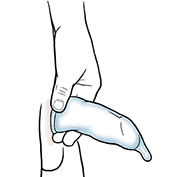
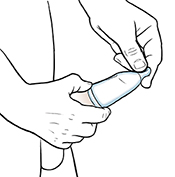
Here's how to use it: Open the condom wrapper and place the condom on the tip of the penis. Squeeze the tip of the condom to remove air and create a space to collect semen after ejaculation. Roll the condom down to the base of the penis.
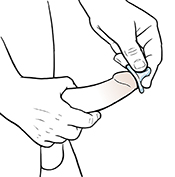
Man putting condom over tip of erect penis.

Man rolling condom over erect penis.

Man holding condom at base of penis.


In addition:

  • If you use a lubricant, make sure it’s water based. Don’t use petroleum jelly, oil, or hand cream. They can make the condom break.

  • Use a new condom every time you have sex.

  • You can buy condoms in a drugstore or supermarket. Keep them wrapped until you use them.

  • To prevent pregnancy, condoms work best if you use them with spermicide, also available in the drugstore or supermarket.

  • Keep condoms on hand. Store them in a cool place. Don’t keep them in your wallet or in your car.

Featured in

Online Medical Reviewer: Donna Freeborn PhD CNM FNP

Online Medical Reviewer: Heather Trevino

Online Medical Reviewer: Irina Burd MD PhD

Date Last Reviewed: 09/01/2025

© 2000-2026 The StayWell Company, LLC. All rights reserved. This information is not intended as a substitute for professional medical care. Always follow your healthcare professional's instructions.



FPC Locations

FPC Locations

Find a Provider

Find a Provider

Our Services

Our Services

Patient Portal

Patient Portal
Related Articles
Read article
Wellness
Sleep Deprivation in Teens: A Common Problem

Teens on average need about 8 to 10 hours of sleep at night. But most don't get the amount of sleep they need. School, friends, homework, activities, television, and the computer may all have a higher priority for a teen than sleep. Sleep deprivation can have serious consequences for a teen's health and well-being.

Read article
Wellness
Helping Your Teen Cope with Chronic Illness

Your teen has recently been diagnosed with a chronic illness. There are things you can do to help you and your teen cope.

Read article
Wellness
Cognitive Development in the Teen Years

Cognitive development means the growth of a child's ability to think and reason. This growth happens differently from ages 6 to 12, and ages 12 to 18.

Read article
Wellness
Teens: Relationship Development

The teen years bring a focus on social interactions and friendships. This includes same-gender friends, same-gender groups of friends, and cross-gender groups of friends. In addition, sexual maturity triggers teens' interest in dating and sexual relationships.